GREENMO long-term Strategy for MED Green and Inclusive Mobility hubs
Year: 2026
Stage: Completion
Main Category(ies): Mobility (people/goods)
Related to: Logistics Mobility Territorial Planning
Type of policy instrument(s): Guidelines
Geographical Focus/Target Area(s): Coastal/Maritime areas Islands Urban areas
Countries: Albania Croatia Cyprus France Greece Italy Malta Portugal Slovenia Spain
GREENMO long-term Strategy for MED Green and Inclusive Mobility hubs
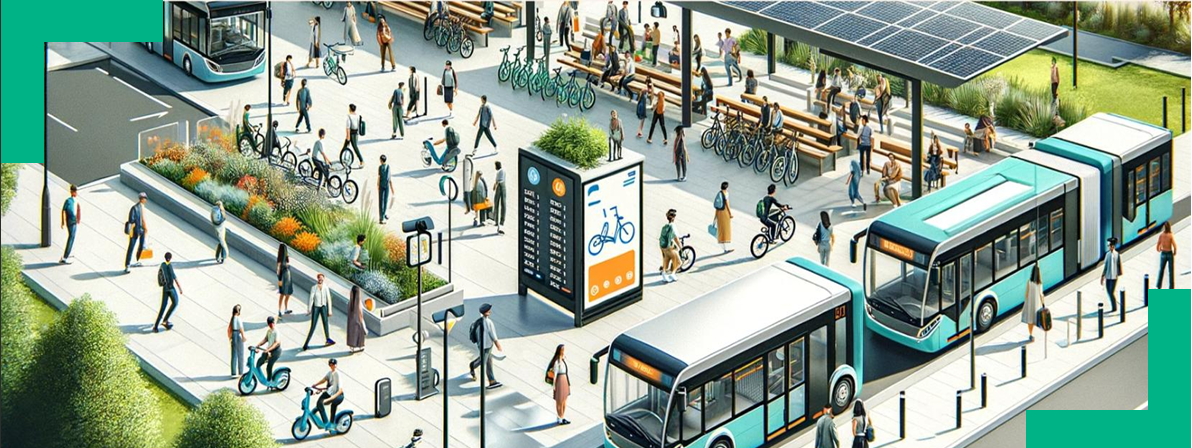
GREENMO developed common MED standards for mobility hubs, which can enable replication and interoperability in the region, empowering stakeholders with a tested, ready-to-use framework through the GREENMO Strategy and the GREENMO Recommendations for public and private decision-makers. The Strategy envisions mobility hubs in the MED Areas as community-driven, multi-modal and sustainable spaces that integrate smart solutions with local identity, turning mobility into a catalyst for social cohesion, environmental responsibility and resilient growth.
The approach to create this framework included the collection, consolidation and assessments of fragmented knowledge about different types and governance structures of mobility hubs, as well as the study of comparing the existing stakeholder opinions through interviews with policy-makers and stakeholders (60 interviewees in total), to citizens’ expectations and real needs through an extensive questionnaire survey (1,402 respondents) and participatory workshops (130 participants). The detailed analysis and comparison of these insights allowed the identification of gaps to be tackled, while highlighting the prioritised fundamental factors such as the transport offerings, availability of options, public space integration, digital integration and signage.
The framework adapts the abstract concept of “mobility hubs” into practical guidance for Mediterranean policy-makers, local and regional authorities, and urban planners, created through top-down and bottom-up participatory processes in six partner countries (Greece, Italy, Cyprus, Malta, Spain, and Bosnia and Herzegovina). The strategy promotes the combination of sustainable transport modes with non-mobility services and citizens’ needs (i.e. parcels from lockers, grabbing a coffee, etc.)